Event
Architecture Pop-up Lab Exchange (APLE) “Teaching Practices, Practicing Architecture” Conference
Location
Faculty of Architecture, University of Sarajevo
Date
26. – 27.3.2026
In March 2026 Jana Čulek gave a paper presentation as part of the international conference titled “Teaching Practices, Practicing Architecture” which was organized as the final event of the Architecture Pop-up Lab Exchange (APLE) Erasmus+ project.
Paper Abstract
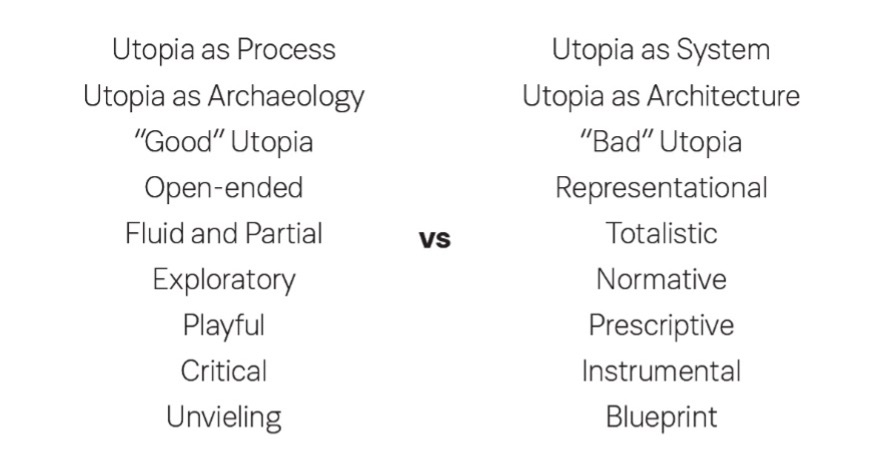
Situating itself within the theoretical and methodological framework of the ongoing “EDUTOPIA – Utopia as Educational Practice in Architecture: New Methods for Envisioning Transformational Change” research project, the paper builds on the hypothesis that architectural and spatial education can and must move beyond technical and product-focused training towards the development of transversal and critical thinking, predominantly by employing speculative and utopian modes of thinking and methods of practice. Taking as a broader aim the need to equip future practitioners with the means to not only produce built space, but to also address and engage with urgent social and spatial challenges, the methods developed for the design studio within the scope of the project integrate insights and approaches from architecture and urbanism with those of the humanities fields. Developing a framework for experimental design studio assignments, the project brings together creative methods from utopia, fiction, and other speculative and narrative-based forms.
The paper brings forth both the methodological structure of the project, some of the initial findings as well as some ongoing outputs from the design studio. Exploring the discursive and speculative potential of the architectural discipline and placing focus on its potential to actively engage with a larger array of both spatial and societal topics, the project treats the design studio as a space for critical inquiry and imaginative world-building – a place for problematizing, and not merely problem-solving. Focusing more on systems, processes, and interconnections, rather than finalized and embodied products the methods and approaches developed through the design studio assignments aim to challenge conventional pedagogies and expand the role of spatial education in preparing students for spatial practice as a form of societal and cultural engagement and transformation.
About the Event
The international conference “Teaching Practices, Practicing Architecture”, organized within the Architecture Pop-up Lab Exchange (APLE) Erasmus+ project, was held as a two-day event on 26–27 March 2026 at the Faculty of Architecture, University of Sarajevo. It brought together academics, professionals, and stakeholders to explore innovative approaches to architectural education and practice. The event served as a dynamic platform for dialogue, knowledge exchange, and collaboration between higher education institutions and the professional sector.
The conference focused on the relationship between teaching methodologies and real-world architectural practice, highlighting the importance of experiential learning, interdisciplinary approaches, and the integration of emerging technologies. Through a series of presentations, panel discussions, and interactive sessions, participants examined current challenges in architectural education and proposed forward-looking strategies for its development.
A key aspect of the conference was the active involvement of industry stakeholders, who contributed valuable insights into professional expectations, practical skills, and opportunities for future cooperation. This exchange emphasized the need to bridge the gap between academia and practice, fostering stronger partnerships and more responsive educational models.
Parallel sessions featured a wide range of research topics, including sustainable design, circular economy principles, digital tools, as well as critical and experimental pedagogical methods. Discussions also addressed socially responsible design, heritage transformation, and innovative studio practices, reflecting the diversity and complexity of contemporary architectural discourse.
The conference concluded with a collaborative reflection on achieved results and future directions, reinforcing the importance of continued international cooperation and the development of adaptable, practice-oriented educational frameworks. Overall, the event highlighted the role of architectural education as a catalyst for innovation, critical thinking, and meaningful engagement with societal and environmental challenges.