Event
Passages: Architecture for Flowing and Connecting Spaces
Location
Politecnico di Milano
Date
24. – 26.9.2025
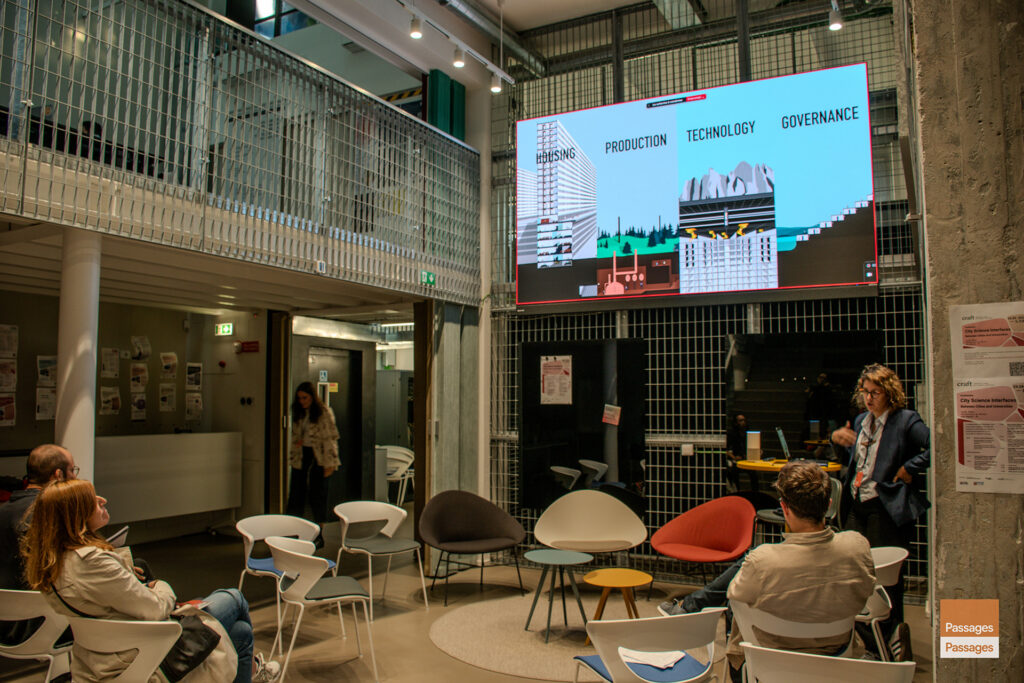
The last week of September 2025 Jana Čulek gave a presentation as part of the Passages: Architecture for Flowing and Connecting Spaces conference organized at the Politecnico di Milano. The presentation titled “Keep Your Eyes on the Road Ahead: A Utopian view of Personal Transporation” examined two utopian examples from the 20th century – Geoffrey Jellicoe’s Motopia (1961) and Disney’s television feature Magic Highway USA (1958). Through the topic of technological development – precisely the growth of both use and importance of the personal automobile – the paper illuminated some of the key repercussions of these developments, namely the rise of the suburban model and the simultaneous decline of dense, multi-layered urban environments. Comparing the two cases, the paper argued that utopian mobility imaginaries were not only aimed at mapping technological potential, but also at critiquing the social and spatial consequences of these emerging paradigms, remaining thus vital tools for understanding and reshaping the future of cities.
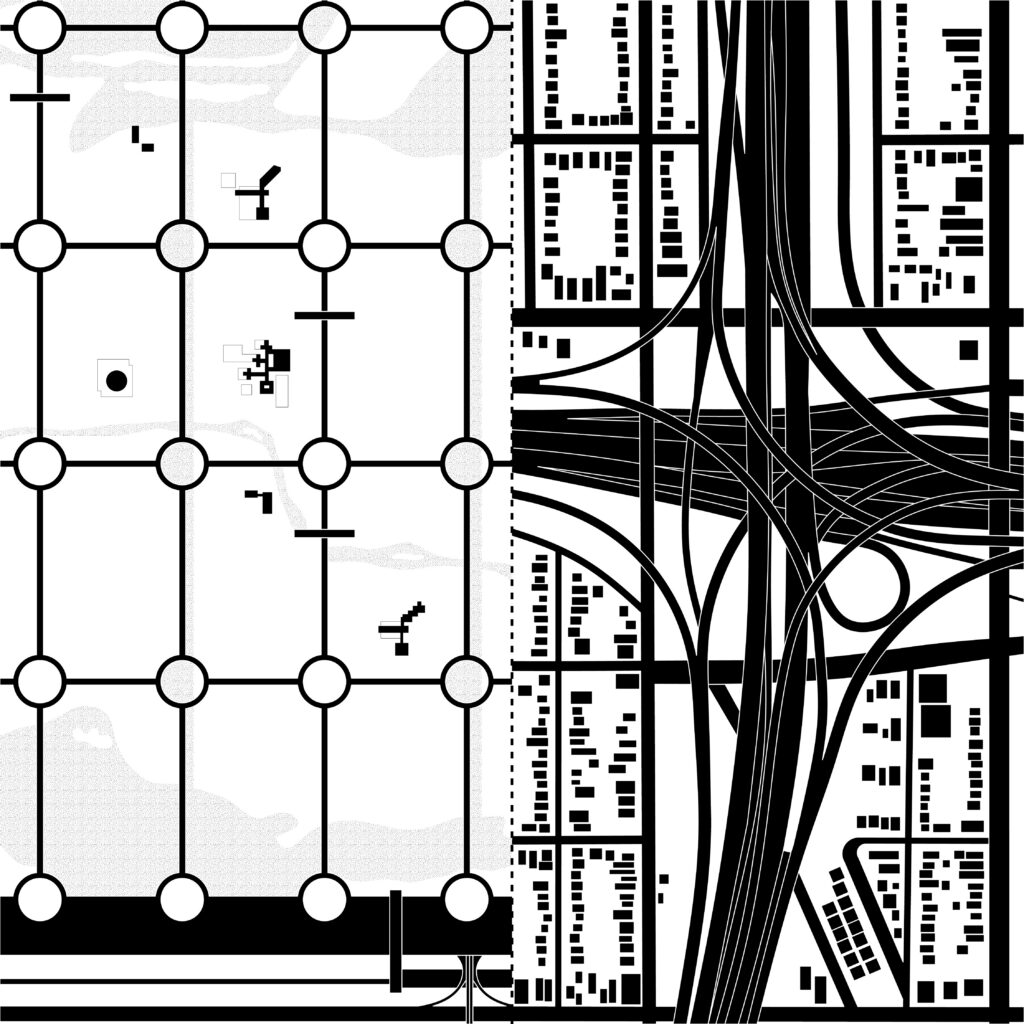
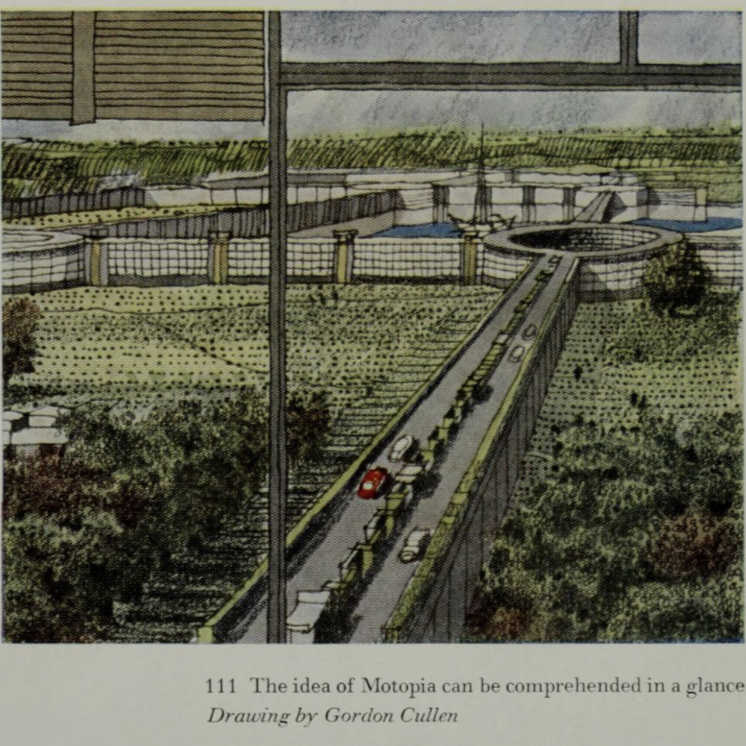
Utopian thinking has long functioned as a critical tool for testing possible futures and responding to challenges of its time. In the mid-20th century, a period marked by rapid suburban expansion and the growing dominance of the automobile, utopian narratives became a space for articulating aspirations and anxieties about mobility. The paper examines two contemporaneous yet radically different visions of the future—Disney’s Magic Highway U.S.A. (1958) and Geoffrey Jellicoe’s Motopia (1961)—and explores how utopian discourse critically reflected on and tested divergent approaches to transportation, landscape, and the human experience.
While both projects revolve around the increased use of personal vehicles, they differ in underlying values. Magic Highway U.S.A. centres around exploring the possibility of global connectedness and the convenience of the personal vehicle, presenting a highly consumerist, techno-optimistic vision of society where automated cars and highways reshape everyday life—echoing American postwar ideals of progress and freedom. In contrast, Jellicoe’s Motopia offers a more human-centric and ecologically sensitive approach by segregating pedestrian and vehicular flows to preserve the integrity of public space and social interaction.
The narratives illuminate key tensions of the era: the rise of the suburban model and the simultaneous decline of dense, multi-layered urban environments. Their spatial logic suggests, albeit in different ways, that mobility has become the central organizing principle of urban spaces. Both projects embody the hopes and fears of their time: one projecting a seamless future of consumer convenience, the other warning of its dehumanizing effects. Comparing the two cases, the paper argues that utopian mobility imaginaries are not only aimed at mapping technological potential, but also critique the social and spatial consequences of emerging paradigms, remaining vital tools for understanding and reshaping the future of cities.